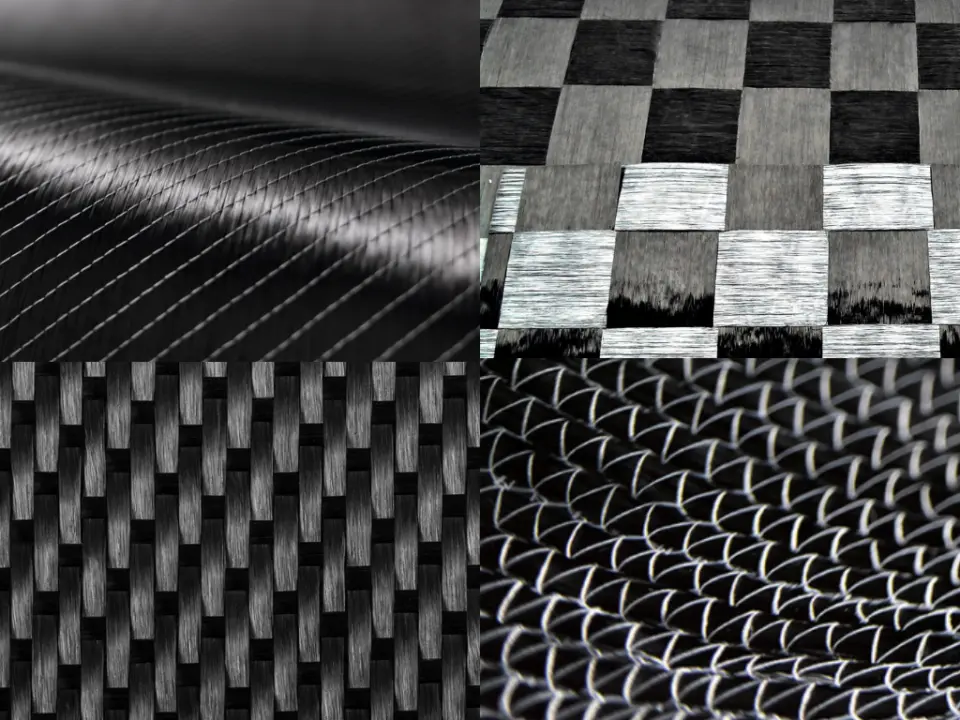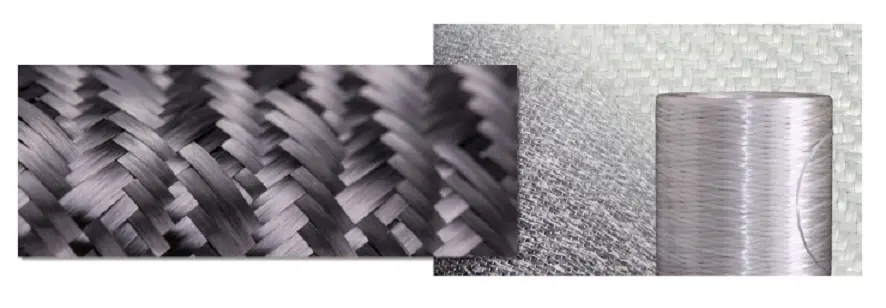


Glass Fibre – A guide by Cristex
What is Glass Fibre?
Glass Fibre is a material that is made up of numerous extremely fine filaments of glass. Glass fibre based textiles are the most commonly used reinforcements in the composites sector. Textile-grade Glass Fibre is made from silica (SiO₂) sand (which is also the basic element in quartz).
The History
When discussing fibre reinforcement, it is fibreglass which is the original modern-day composite. In history, ancient Greeks and Egyptians discovered how to create thin fibres by melting glass. As times moved on and techniques evolved, commercial-scale manufacturing of continuous fibres was implemented in the 1930s for structural reinforcement.
In 1938 the patents were awarded for ‘Textile Materials’ and ‘Glass Fabric’. This ensured the future of Glass Fibre within the textile reinforcement industry.
The production
Glass Fibre is formed when thin strands of silica-based or other formulations of glass are extruded into many filaments with small diameters suitable for textile processing. The manufacturing process for Glass fibres suitable for reinforcement uses large furnaces to gradually melt the silica sand, limestone, kaolin clay, fluorspar, colemanite, dolomite and other minerals into liquid form. It is then extruded through bushings, which are bundles of very small orifices (typically 5–25 micrometers in diameter for E-Glass, 9 micrometers for S-Glass).
These filaments are then sized (coated) with a chemical solution. The individual filaments are now bundled in large numbers to provide a roving. The diameter of the filaments, and the number of filaments in the roving, determine its weight, typically expressed in one of two measurement systems: Yield or Tex.
These rovings are then either used directly in a composite application such as pultrusion, filament winding etc. or to manufacture fabrics such as chopped strand mat (CSM), woven fabrics, knitted fabrics, multiaxial fabrics or unidirectional fabrics. Although not as strong or as rigid as Carbon Fibre, it is lower cost and less brittle.
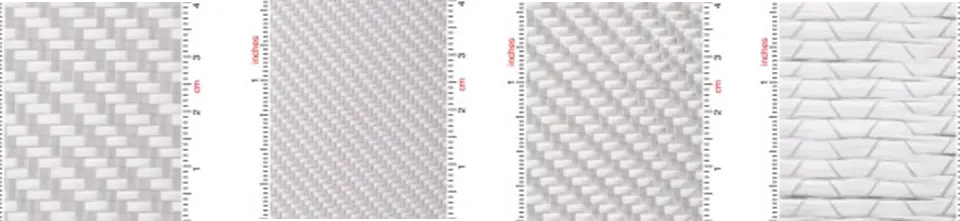
Cristex supply a wide range of fabrics, to see our product range or for technical data on a certain style, follow this link.
If you would prefer to discuss your requirements in more detail, send us an email – sales@cristex.co.uk or call us on 0128277 0666
Ready to discuss your next composites project?
Speak to our technical team about materials, manufacturing support and bespoke solutions.